Munchkin
- 4.6
- Rating
- 50.00K
- Installs
- $9.99
- Price

 Analysis by App-foxy
I went into Munchkin expecting a straightforward digital card game, but its appeal became clearer after a few sessions: the fun is not simply in defeating monsters. It comes from deciding when to take a risk, watching a plan go wrong, negotiating your way out of trouble, and then immediately wanting another attempt. Dire Wolf Digital has turned the familiar tabletop experience into a mobile game with a deliberately mischievous personality.
This is a paid card game rather than a casual free download. It costs $9.99, carries a Teen content rating, and also offers in-app purchases priced at $4.99 per item. That combination matters when deciding who it suits. I think it works best for people who already enjoy competitive tabletop games and want a compact way to play the Munchkin formula, rather than for someone looking for a quiet solitaire card game.
From opening a door to creating trouble
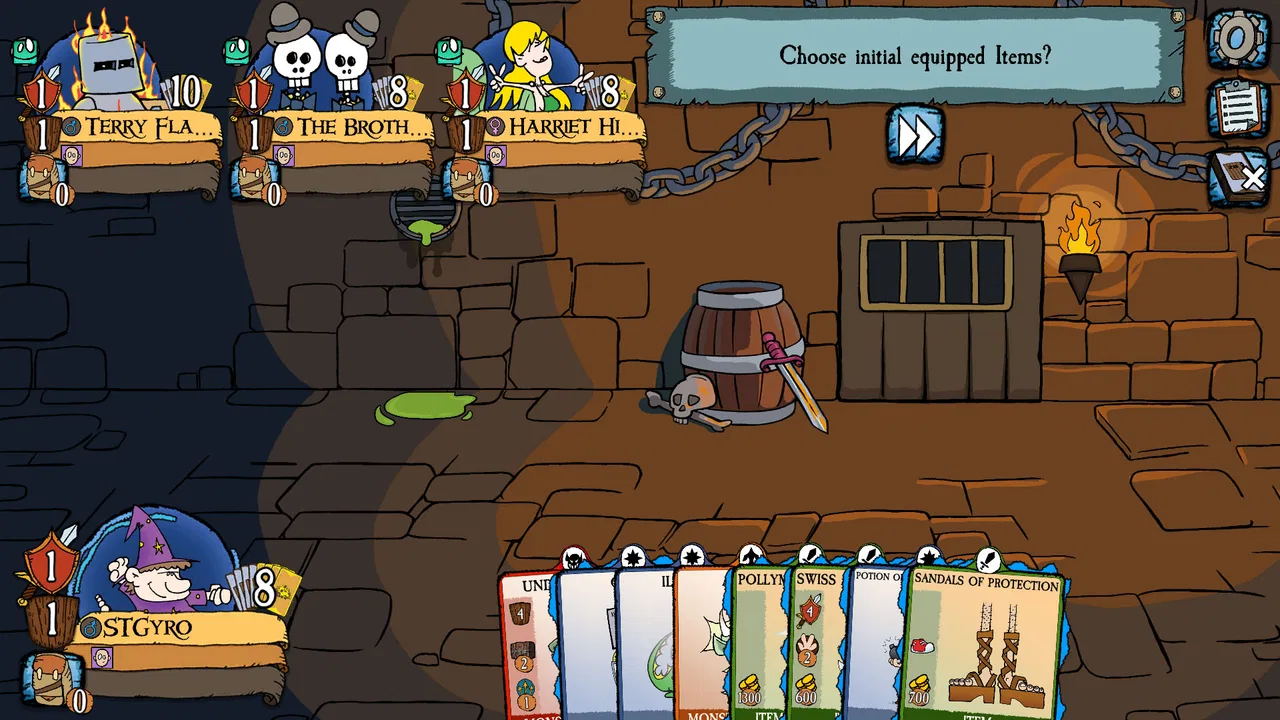
The first action is wonderfully direct. You open the next door, reveal what is waiting, and decide how boldly you want to deal with it. The basic rhythm is easy to understand, but the consequences are rarely flat. A monster can become a useful source of treasure, a dangerous obstacle, or an invitation to ask another player for help. That immediate choice gives every turn a little tension.
You May Also Like

 Blood Strike: 2.5 Anniversary
Blood Strike’s Loadouts Turn Every Drop Into a Tactical Gamble
A close look at Blood Strike’s custom loadouts: how fast access to signature weapons reshapes its battle royale rhythm, rewards preparation, and narrows the gap between fights.

 Pandora - Music & Podcasts
Pandora’s Music Is Easy to Start, but Harder to Recover
Pandora’s strength is its low-effort path from a seed to a station. Its weak spot is how much confidence it asks you to place in connection, setup, and quiet recovery.

 8 Ball Pool
 Is Built on Rivalries, Rematches, and Routine
A close look at the rivalries, rematches, shared routines, and unanswered safety questions that turn a quick pool match into a persistent mobile community.

 Samsung Music
’s Quiet Strength Is Playing What You Already Own
Its reach comes less from spectacle than from dependable access to a personal library. That simplicity is both the app’s strongest retention engine and its ceiling.

 AccuWeather: Weather Radar
AccuWeather Review: A Quick, Clear Forecast for Everyday Decisions
For everyday plans, the best forecast is the one you can understand quickly. AccuWeather makes rain timing, radar, and local conditions easy to act on, with a few trade-offs.

 Hill Climb Racing
Why Hill Climb Racing Still Turns Crashes Into One More Run
A tiny car, a bumpy hill and one more upgrade: Hill Climb Racing keeps resurfacing because its simple chaos makes every near-miss feel personal.
More From Our News Desk
View All News


I like that the game does not bury its identity under complicated presentation. The central idea is still about killing monsters and collecting loot, but the humor and the competitive edge make those actions feel less routine than they sound. You are not just improving a deck in isolation. You are trying to gain an advantage while watching what everyone else might be holding, planning, or willing to risk.
The digital format makes the rules easier to follow during play. Instead of physically checking cards, calculating every effect, and remembering whose turn it is, the app handles much of the administrative work. That is particularly useful when several effects overlap. I could focus more on the decision in front of me and less on whether I had missed a small rule interaction.
There is still a learning curve, especially if you are unfamiliar with the tabletop game. The card language and timing can feel dense at first, and the humor sometimes assumes that you are comfortable with a game built around trickery and interference. I would not recommend beginning with the expectation that every match will be immediately relaxing. The first few rounds are better treated as a practical lesson in how the game thinks.
One useful approach is to resist spending every helpful card as soon as it appears. New players often see a way to become stronger and take it immediately, but the more important question is whether that strength will matter on the next dangerous turn. Holding a card for an opponent’s attack, a difficult monster, or a last-minute swing can be more valuable than making your current position look impressive.
Why the feedback feels personal
The feedback rhythm is what keeps the matches lively. You take an action, see a clear result, and then have to respond to the new situation. A successful fight gives you progress and loot, but it can also make you the player everyone else wants to slow down. A failed attempt does not always feel like a dead end; it can reveal who is willing to help, who is waiting to interfere, and which resources you should protect next time.
That rhythm creates a useful kind of uncertainty. I rarely felt that a turn was meaningless, even when the outcome was unfavorable. A setback could change the balance of the table, expose another player’s priorities, or leave me better prepared for the next encounter. The game’s strongest moments happen when a simple plan becomes a social and tactical problem.
This is also where the difference between playing against people and playing against automated opponents becomes important. Human players can recognize that you are close to winning and react accordingly. They can make an apparently irrational choice simply because it is funny or because it damages your plan. That unpredictability is a major part of the Munchkin experience, and it is difficult for any digital opponent to reproduce perfectly.
For an everyday scenario, I can imagine opening the game during a short evening break with friends who already know the rules. One player starts a fight expecting an easy reward, another notices that the victory would put them ahead, and suddenly the table is bargaining over assistance and counterplay. The match becomes memorable not because the interface did something spectacular, but because one small decision changed everyone’s incentives.
That same quality can be a weakness if you prefer tightly controlled strategy. Munchkin includes a strong element of table politics and surprise. The best plan can be disrupted by another player’s intervention, and sometimes the result feels more chaotic than skillful. I enjoy that when I am in the mood for a playful contest, but I would choose a more deterministic card battler when I want every outcome to be traceable to careful long-term planning.
Loot is more than a reward screen
The reward stage is satisfying because it changes what you can attempt next. Treasure is not merely a number that rises after a victory. It gives you new ways to approach future fights and changes how threatening your character appears to everyone else. Becoming stronger is useful, but it also paints a target on your back.
I found the best decisions were often about timing rather than raw value. A powerful item may help you win immediately, yet revealing too much strength can encourage the table to unite against you. A less dramatic improvement can be better if it keeps your position ambiguous. This is one of the game’s less obvious lessons: the most valuable reward is sometimes the one that preserves your options, not the one that produces the largest visible advantage.
The loot also gives failed turns a reason to continue. Even when I did not get the result I wanted, I was usually thinking about how the next draw or encounter might repair the situation. That forward pull is important in a game where another player can interfere with a carefully prepared attack. The reward system keeps the match moving instead of making one bad decision feel final.
At the same time, the reward loop can feel uneven if you prefer a steady sense of progression. Luck and player interaction both influence how quickly a character improves. Some sessions produce a satisfying chain of upgrades, while others require more patience and opportunistic play. I would not approach this as a pure collection game where every match reliably delivers a stronger build. Its pleasure comes from adapting to what appears.
The purchase model is worth considering here. The initial price already places the game in a different category from free card games, while the $4.99 in-app items add another spending decision. I would personally decide whether the base experience fits my habits before buying anything extra. If you dislike paid games that also present optional purchases, this structure may be uncomfortable even if the core play is enjoyable.
The reset that makes another match tempting
The session reset is not just a technical restart. When a match ends, the board state disappears, but the memory of the previous mistakes remains. I may begin the next game with a different idea about when to fight, when to hold a card, or when to avoid looking too strong. That reset gives the game its repeatable quality without requiring every session to become a long campaign.
I appreciate this format for short social play. A match can have its own story, and a new session lets everyone start clean rather than carrying an overwhelming lead from an earlier round. It is also forgiving for groups with mixed experience. A player who made poor choices in one game can try a different approach immediately instead of spending hours trapped in a weak position.
The downside is that the reset may feel abrupt to players who want persistent character development. If your favorite card games are built around a campaign, a permanent collection, or a carefully tuned deck that evolves over many hours, this may not provide the same sense of ownership. Munchkin is more interested in the drama of the current table than in building a single perfect long-term identity.
That makes it a particularly good fit for people who enjoy replayable board games. I can play one session for the jokes and surprises, then return later without needing to remember a complicated campaign state. The game’s appeal is concentrated in the loop: reveal a problem, decide how much danger to accept, gain something useful, become vulnerable to interference, and start again with a better understanding of the table.
It is less suitable for someone who wants a completely predictable solo challenge or a game that can be enjoyed without reading card text. The Teen rating also reflects the game’s combative, mischievous tone, so I would not choose it as a universally suitable family card game. It is aimed at players comfortable with monsters, take-that interactions, and a little competitive nastiness.
How it compares with familiar card-game alternatives
Compared with a traditional physical card game, the app is more convenient. There is no setup, no need to sort a table full of cards, and less chance of forgetting a rule during a complicated exchange. That makes it attractive when I want the Munchkin style without carrying a box or organizing a group around a physical table.
Compared with a typical digital collectible card game, it feels less focused on building an optimized deck and more focused on the shared story of a match. The important question is often not “What is the mathematically strongest list?” but “Can I survive this fight, and who benefits if I ask for help?” Players who enjoy social manipulation may prefer that. Players who want precise deck construction and highly controlled competitive balance may find it too swingy.
It also differs from quiet solo card games because the reward is tied to conflict. You are not simply solving a puzzle at your own pace. Other players, whether human or automated, affect the value of your choices. That makes the game more entertaining with the right group, but less relaxing when you want a low-pressure experience.
The current version is 2.1.0, and the game supports devices running at least OS 9. Its store presence shows a 4.6 average from around 2.3 thousand ratings, with over 50 thousand installs. Those figures suggest a smaller, more focused audience than the biggest mobile card games, which matches my impression: this is a specific adaptation for people who want this particular brand of chaotic monster-and-loot play, not a universal replacement for every card game.
Who should play it and who should pass
I would recommend it to tabletop fans who enjoy games where negotiation, timing, and surprise matter as much as the cards themselves. It is especially appealing if you like laughing at a plan collapsing, then trying to recover before another player reaches the finish line. The digital handling of rules is a real advantage for anyone who knows the physical concept but wants a faster way to get a match running.
I would also suggest it for groups that want a competitive game with a strong social layer. The most enjoyable sessions are likely to come from players who understand that helping someone can be useful now and dangerous later. If everyone treats every turn as a private optimization puzzle, some of the personality disappears.
I would skip it if you dislike direct player interference, uncertain outcomes, or games where the leader can become the table’s shared problem. I would also look elsewhere if your priority is a deep solo campaign, a calm puzzle experience, or a free-to-start game with no extra purchase considerations. The $9.99 entry price asks you to know what kind of card game you are buying.
My practical advice is to learn the basic flow before judging the balance. Early matches can feel messy because you are still discovering which resources are worth saving and how quickly the table reacts to visible progress. Once those decisions become familiar, the game’s humor and tension have more room to work. I also recommend treating every opponent’s offer of help as a transaction, even when it sounds generous; the future cost is often the real point of the deal.
My verdict on the complete loop
The action is immediate: reveal a challenge and decide whether to confront it. The feedback is lively because every result changes the social and tactical situation. The reward gives you more power while making you more noticeable. The reset clears the board without clearing your memory, which is exactly why another session feels worthwhile.
That loop is the reason I enjoyed Munchkin more than its simple premise initially suggested. It is not trying to be the most serious strategy card game or the deepest deck-building system on mobile. Its strength is the combination of accessible actions, disruptive choices, and stories that emerge from players pushing their luck.
Dire Wolf Digital’s adaptation is best when approached as a digital tabletop gathering rather than a solitary progression machine. I would pay for it if I wanted this specific kind of monster-fighting card game and had friends or opponents who appreciated its playful backstabbing. I would be more cautious if I wanted a fully controlled competitive ladder or a generous free experience.
Overall, I think it earns its place as a focused card game for Teen players who enjoy risk, loot, and table politics. The strongest reason to return is not simply becoming stronger; it is discovering how the next small decision can turn an ordinary fight into a completely different story.
FAQs for Munchkin
01What is Munchkin, and how does the mobile game work?
Munchkin is a humorous fantasy card game built around exploring dungeons, defeating monsters, collecting treasure, and reaching the winning level before your opponents. The mobile version keeps the original game’s playful backstabbing and negotiation mechanics, allowing players to cooperate temporarily and then turn against one another. Its rules are easy to understand, although the many cards and special effects can take a few rounds to master.
02Can I play Munchkin alone or do I need other players?
Munchkin is primarily designed as a multiplayer experience, since much of the fun comes from bargaining, forming temporary alliances, and interfering with other players’ battles. Depending on the version and available modes, you may be able to practice against computer-controlled opponents or play solo-style matches, but the social interaction is a major part of the game. Check the current app description for the supported player modes.
03Is Munchkin free to download, and does it include in-app purchases?
The availability and pricing of Munchkin can vary between Android and iOS, as well as by region and edition. Some versions may require an upfront purchase, while additional content, expansions, cosmetic items, or other features could be offered separately. Before downloading, review the store listing carefully to see whether the app contains in-app purchases, advertisements, subscriptions, or paid downloadable content.
04Does Munchkin require an internet connection to play?
An internet connection may be necessary for online multiplayer, account features, updates, cloud synchronization, or matchmaking. If the version you install includes local play or computer-controlled opponents, some matches may work without a connection, but offline functionality can differ between releases. It is best to confirm the requirements shown on the Google Play Store or App Store before relying on the game during travel.
05Is Munchkin suitable for children and new card-game players?
Munchkin is relatively approachable for beginners, but it is not a traditional cooperative children’s game. Its humor often includes fantasy violence, satire, monsters, betrayal, and deliberately competitive interactions between players. Younger users may need guidance with the rules and the game’s tone, while complete beginners should expect a learning period. Parents should check the official age rating and review the content before allowing installation.
Pros
- Fast
- funny card-based gameplay with plenty of player interaction.
- Simple rules make it approachable for casual tabletop players.
- Many card combinations create different strategies each session.
- The humorous fantasy theme gives the game a distinctive personality.
- Short matches make it convenient for quick gaming sessions.
Cons
- Random card draws can strongly influence the outcome.
- Player alliances may lead to arguments or uneven targeting.
- The interface can feel cluttered during large battles.
- Some cards and rules require careful reading to avoid disputes.
- Replay value may drop without expansions or a regular group.

Munchkin
Gallery